


A professional septic system inspection in the United States usually costs between $150 and $650. Most homeowners pay about $350 to $450 for a full inspection.
- A quick visual check costs about $100 to $200.
- A standard routine inspection costs about $150 to $300.
- A full inspection for a home sale costs about $300 to $650.
- A state-required inspection (like Massachusetts Title 5) can cost $400 to $900.
- A well and septic inspection bundle costs about $400 to $1,000 or more.
Your final price depends on where you live, what kind of system you have, how easy the tank is to reach, and whether the tank needs to be pumped during the visit.
That may sound like a lot for a look at a tank buried in the yard. But a failed septic system can cost $6,000 to $25,000 or more to replace. Spending a few hundred dollars now can save you from one of the most expensive surprises a homeowner can face.
This guide walks you through everything: what a septic inspection is, what you pay for, what the inspector checks, what the law requires in some states, what lenders may ask for, and how to keep costs down.
What Is a Septic System?
If your home is not connected to a city sewer line, your wastewater has to go somewhere. That “somewhere” is usually a septic system. Millions of American homes use one, especially in rural areas, small towns, and older suburbs.
A basic septic system has two main parts:
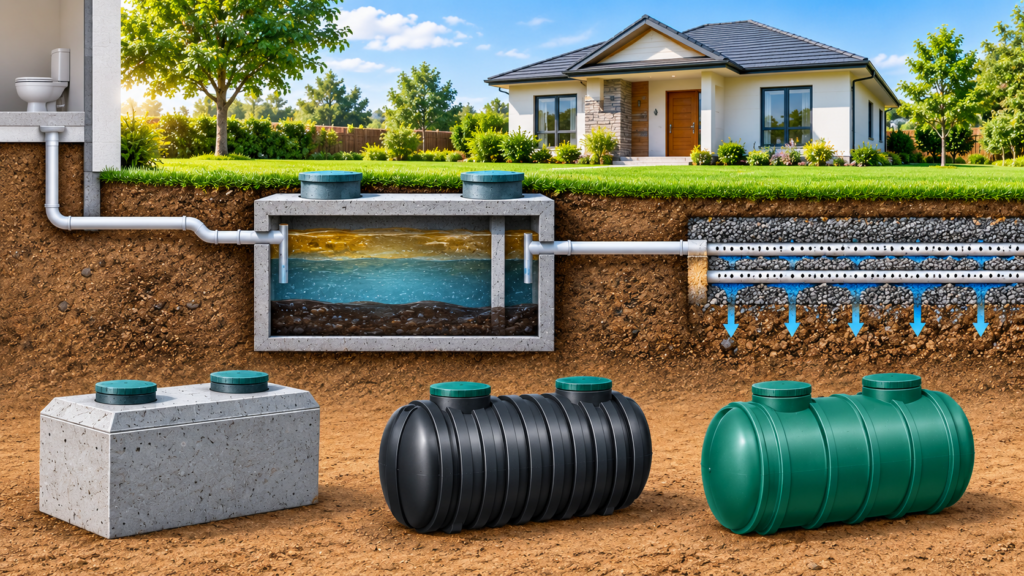
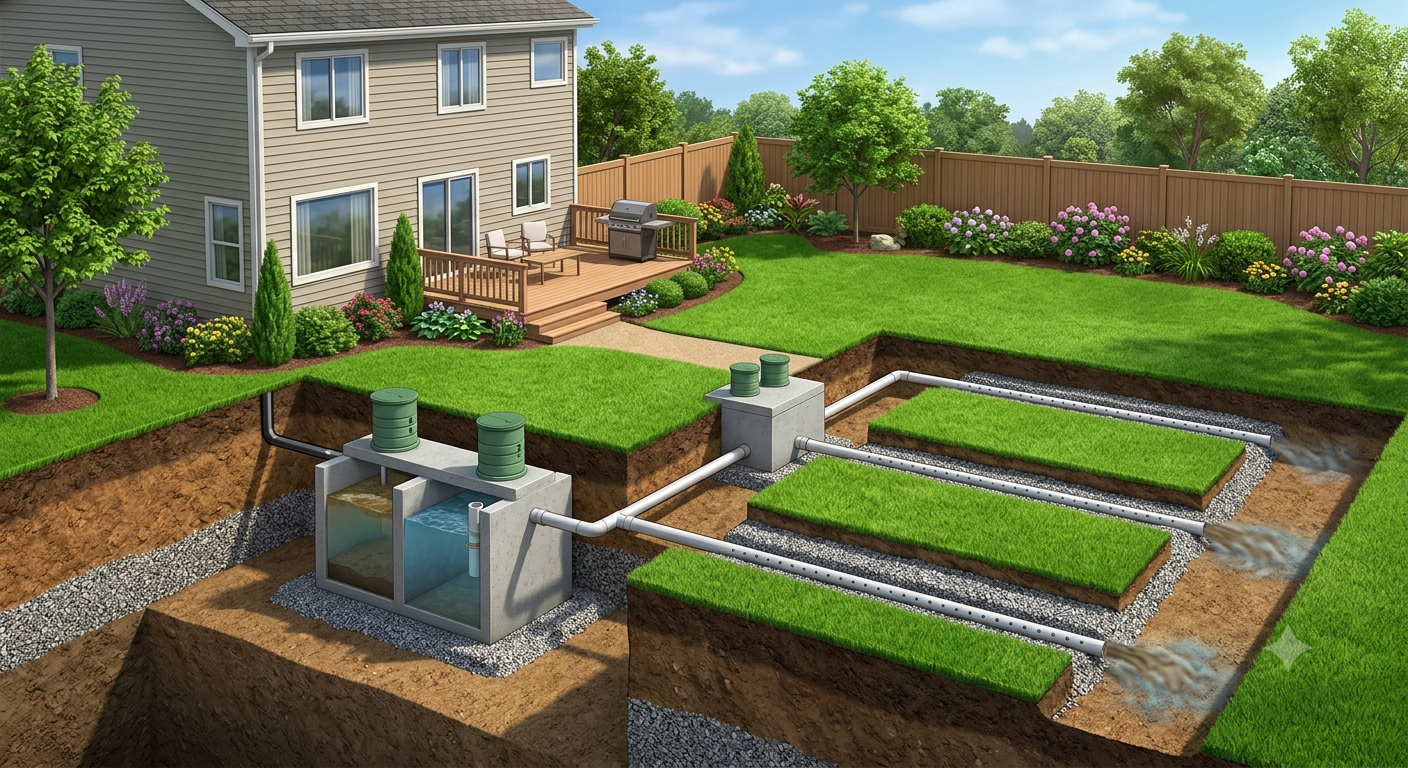
- The septic tank: This is a large, watertight container buried in your yard. It is usually made of concrete, plastic, or fiberglass. All the water from your toilets, sinks, showers, dishwasher, and washing machine flows into this tank.
Inside the tank, the waste separates into three layers:
- Scum floats on top. This is made of oils, grease, and light materials.
- Liquid wastewater (also called effluent) sits in the middle.
- Sludge sinks to the bottom. This is made of heavy solids.
Natural bacteria inside the tank break down some of the solids over time. But not all of it breaks down, which is why tanks need to be pumped every few years.
- The drainfield (also called a leach field): The liquid in the middle layer flows out of the tank into a series of pipes buried in the yard. These pipes have small holes that let the water slowly soak into the soil. The soil acts as a natural filter, removing harmful germs and nutrients before the water reaches groundwater.
Some systems also have:
- A distribution box (D-box) that spreads the water evenly into the drainfield pipes.
- A pump that moves water uphill or to a raised drainfield.
- An effluent filter that stops solids from leaving the tank.
- Alarms that warn you when water levels get too high.
When all these parts work together, you barely notice your septic system. When one part fails, you notice very quickly.
What Is a Septic Inspection?
A septic inspection is a check-up for your septic system. A trained professional looks at the tank, the drainfield, and the other parts to find out if everything is working the way it should.
Think of it like a doctor’s visit for your home’s waste system. The inspector looks for:
- Leaks or cracks in the tank
- Broken or missing baffles (the parts that control flow in and out of the tank)
- Sludge and scum levels that are too high
- Signs that the drainfield is flooded or failing
- Backups into the home
- Problems with pumps, alarms, or filters
- Whether the system is the right size for the home
There are two main reasons people get a septic inspection:
- Routine maintenance: Just like changing the oil in your car, regular inspections help catch small problems before they turn into big ones.
- Buying or selling a home: A home inspection usually does not include a detailed septic inspection. Buyers often hire a separate septic inspector to make sure they are not buying a home with a failing system. In some states and counties, an inspection is required by law before the home can be sold.
Septic Inspection Cost at a Glance
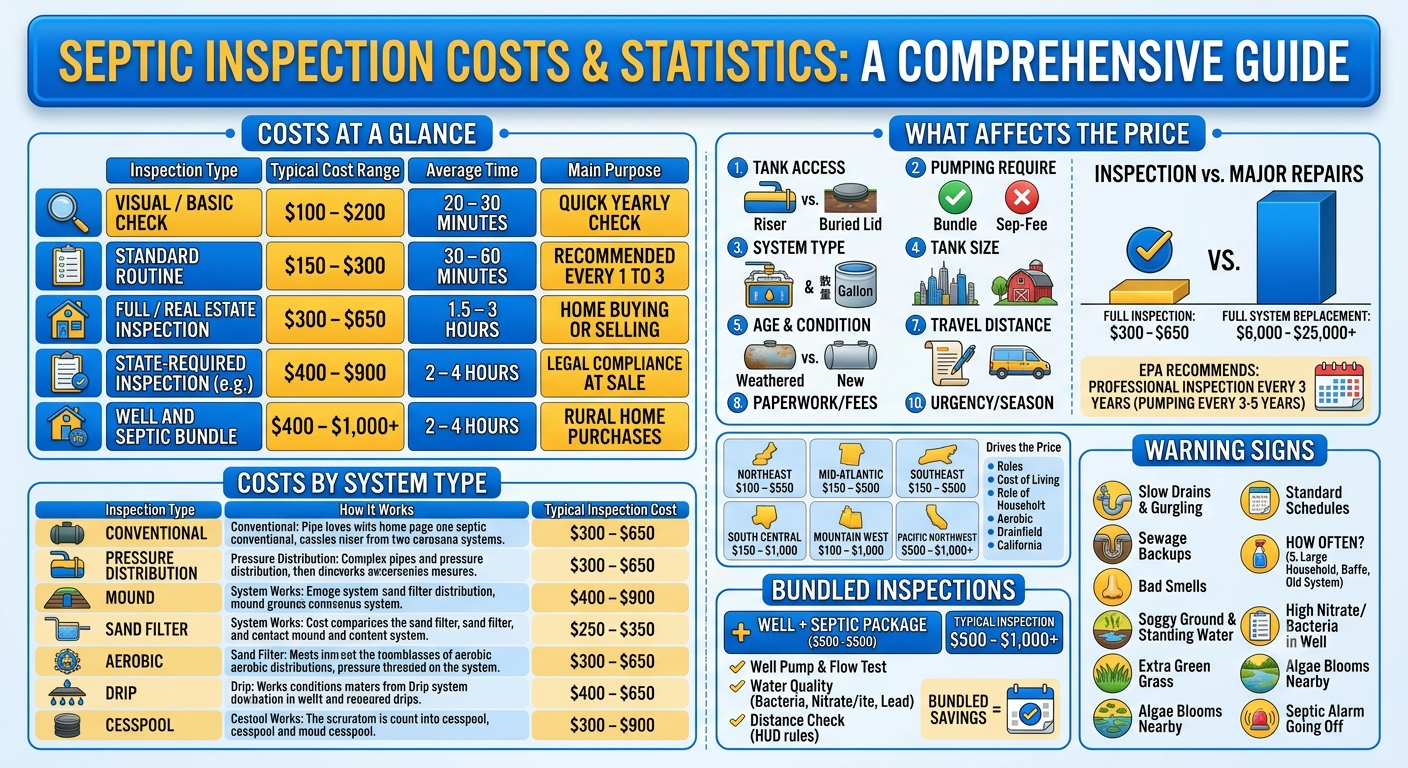
Here is a quick summary of what most Americans pay in 2026. These are typical national ranges. Your local prices may be higher or lower.
| Inspection Type | Typical Cost Range | Average Time | Main Purpose |
| Visual / Basic Check | $100 – $200 | 20 – 30 minutes | Quick yearly check |
| Standard Routine Inspection | $150 – $300 | 30 – 60 minutes | Recommended every 1 to 3 years |
| Full / Real Estate Inspection | $300 – $650 | 1.5 – 3 hours | Home buying or selling |
| State-Required Inspection (e.g., MA Title 5) | $400 – $900 | 2 – 4 hours | Legal compliance at sale |
| Sewer Line Camera Inspection | $125 – $500 | 30 – 60 minutes | Checks pipes for roots and cracks |
| Well and Septic Bundle | $400 – $1,000+ | 2 – 4 hours | Rural home purchases |
National average: about $350 to $450 for a full inspection.
Costs by Inspection Type
Not every septic inspection is the same. Some take 20 minutes. Others take half a day. Here is what you get at each level.
Visual or Basic Inspection: $100 – $200
A visual inspection is the simplest and cheapest option. The inspector usually:
- Asks you questions about the system’s age and last pumping date
- Runs water in the home to see if drains are slow
- Walks the yard to look for soggy spots, bad smells, or extra-green grass over the drainfield
- Checks for obvious backups
What it does not do: A visual check usually does not open the tank or measure sludge levels. It can miss hidden problems.
Best for: Homeowners who had a full inspection recently and want a quick, low-cost check between visits.
Not good for: Buying a home. A visual check alone is usually not enough to protect a buyer.
Standard Routine Inspection: $150 – $300
A standard inspection goes a step further. The inspector typically:
- Opens the tank lid (if it is easy to reach)
- Measures the scum and sludge layers
- Looks at the inlet and outlet baffles
- Checks the effluent filter, if there is one
- Looks for signs of leaks
- Walks the drainfield
Best for: Regular maintenance every 1 to 3 years, especially if you plan to stay in the home long term.
Full or Real Estate Inspection: $300 – $650
This is the most common type for people buying a home. It is detailed and thorough. The inspector usually:
- Reviews permits and past service records
- Locates and opens the tank
- Checks the tank’s condition (often after pumping)
- Inspects baffles, filters, and pipes
- Runs a hydraulic load test (more on this later)
- Checks the distribution box
- Evaluates the drainfield
- Writes a detailed report with photos
Best for: Home buyers, home sellers, and anyone who has never had the system inspected.
State-Required Inspection: $400 – $900
Some states and counties require a special inspection before a home can be sold. The most well-known example is Massachusetts Title 5. These inspections must be done by a licensed or approved inspector and follow a strict checklist. The inspector often has to file official paperwork with the local health department.
Because of the extra rules and paperwork, these inspections cost more.
Sewer Line Camera Inspection: $125 – $500
In a camera inspection, a technician pushes a small waterproof camera through the pipe that runs from your house to the septic tank. This lets them see:
- Tree roots growing into the pipe
- Cracks or breaks
- Sagging pipe sections (called “bellies”) where waste collects
- Clogs
Some inspectors also run cameras into drainfield lines. This is often an add-on to a full inspection.
Best for: Older homes, homes with large trees near the pipe, or homes with slow drains or frequent clogs.
Well and Septic Bundle: $400 – $1,000+
Many homes with a septic system also get their water from a private well. When you buy one of these homes, it makes sense to inspect both at the same time. A bundle usually includes a septic inspection, a well equipment check, and a water quality test. More details on this are in Section 9.
What Affects the Price of a Septic Inspection?
Two homes on the same street can get very different quotes. Here are the biggest reasons why.
1. How Easy It Is to Reach the Tank
This is one of the biggest price factors.
Many newer systems have risers. A riser is a pipe or tube that brings the tank lid up to ground level, so the inspector can open it in seconds.
Many older systems do not have risers. The lid may be buried 6 inches to 3 feet underground, sometimes under grass, a garden, or even a deck.
If the inspector has to find and dig up the lid, expect to pay an extra $50 to $250. If the lid is under concrete or a structure, the cost can go even higher.
Money-saving tip: If you know where your tank lid is, mark it before the inspector arrives. If you plan to stay in the home, think about installing risers. They cost about $200 to $500 and can save you money on every future inspection and pumping.
2. Whether the Tank Needs Pumping
A truly complete inspection often requires pumping the tank. When the tank is full of sludge and liquid, the inspector cannot see the walls, floor, or all the baffles. Pumping empties the tank so they can look for cracks and damage.
Pumping usually adds $300 to $600 if it is not already included. Some companies bundle pumping and inspection together at a lower combined price.
Good to know: If the tank was pumped recently, the inspector may not need to pump it again. Ask about this when you book.
3. Type of Septic System
A simple gravity system is the easiest and cheapest to inspect. Water flows downhill from the house to the tank to the drainfield with no pumps or electrical parts.
More advanced systems cost more to inspect because they have more parts. These include:
- Aerobic treatment units (ATUs) that use air pumps to help break down waste
- Mound systems with a raised drainfield built above the ground
- Sand filter systems that pass water through sand before it enters the soil
- Pressure distribution systems that use pumps to spread water evenly
- Drip irrigation systems that send treated water through small tubes
See Section 6 for price ranges by system type.
4. Size of the Tank
Larger tanks take longer to pump and inspect. A 750-gallon tank is quicker and cheaper to service than a 1,500-gallon tank. Some homes also have two tanks or a multi-compartment tank, which adds time.
5. Age and Condition of the System
Older systems often have missing records, buried lids, worn-out parts, and unknown layouts. The inspector may need extra time to find everything and figure out how it works.
6. Where You Live
Prices are usually higher in:
- Large metro areas with higher labor costs
- Coastal areas with strict water protection rules
- States with detailed inspection laws, like Massachusetts
- Areas where few licensed inspectors are available
Prices are usually lower in rural areas of the South and Midwest where septic systems are very common and there are many service companies.
7. Travel Distance
If you live far from the inspector’s office, you may pay a trip charge. This is often $25 to $100 for remote properties.
8. Paperwork and Permit Fees
Some counties require the inspector to file a report. Some charge a filing fee. Some ask the homeowner to pull records from the health department. These fees are usually small (often under $100), but they add up.
9. Extra Tests
Your inspector may suggest extra tests, such as:
- Camera inspection of pipes
- Dye tests (putting colored dye in the toilet to see if it shows up in the yard or a nearby stream)
- Soil tests
- Drainfield probing or digging test holes
Each add-on raises the total price.
10. Time of Year and Urgency
In many parts of the country, spring and summer are the busiest seasons for home sales. Inspectors may be booked up, and rush jobs can cost more. In cold northern states, frozen ground in winter can make digging harder and more expensive, and some inspections may be delayed until the ground thaws.
Cost by System Type
Here are typical inspection costs for different kinds of septic systems. These are general estimates for a full inspection and do not include pumping unless noted.
| System Type | How It Works | Typical Inspection Cost |
| Conventional Gravity System | Water flows downhill to tank and drainfield | $250 – $450 |
| Pressure Distribution System | Pump pushes water evenly into drainfield | $300 – $550 |
| Mound System | Raised drainfield built above natural soil | $350 – $650 |
| Sand Filter System | Water passes through sand before soil | $350 – $650 |
| Aerobic Treatment Unit (ATU) | Air pump helps bacteria break down waste | $350 – $700 |
| Drip Distribution System | Small tubes release treated water slowly | $400 – $750 |
| Cesspool | Older pit that lets waste soak into ground | $200 – $500 |
Note on ATUs: Many states require aerobic systems to have an ongoing service contract. In some areas, these contracts include regular inspections, which can lower your separate inspection costs.
Note on cesspools: Cesspools are an older type of system. Many states have banned new cesspools, and some require them to be replaced when a home is sold. If you are buying a home with a cesspool, talk to your local health department early.
Cost by Tank Size
Tank size is usually based on the number of bedrooms in the home. Bigger homes need bigger tanks. Here is a general guide for a full inspection plus pumping.
| Tank Size | Typical Home Size | Inspection + Pumping Estimate |
| 750 gallons | 1–2 bedrooms | $450 – $800 |
| 1,000 gallons | 2–3 bedrooms | $500 – $900 |
| 1,250 gallons | 3–4 bedrooms | $550 – $1,000 |
| 1,500 gallons | 4–5 bedrooms | $600 – $1,100 |
| 2,000 gallons | 5+ bedrooms | $700 – $1,250 |
These are estimates. Local rules decide the minimum tank size for each home, so the numbers above may differ where you live.
Cost Differences Across U.S. Regions
Septic inspection prices vary across the country. The ranges below are rough estimates for a full real estate inspection. Always get local quotes.
| Region | Typical Full Inspection Cost | What Drives the Price |
| Northeast (MA, CT, NH, ME, NY, etc.) | $400 – $900 | Strict state rules, older systems, higher labor costs |
| Mid-Atlantic (PA, NJ, MD, DE, VA) | $350 – $700 | Point-of-sale rules in some areas, older homes |
| Southeast (NC, SC, GA, FL, TN, etc.) | $250 – $550 | Many septic homes, high water tables near the coast |
| Midwest (OH, MI, MN, WI, IN, etc.) | $250 – $550 | County rules, frozen ground in winter |
| South Central (TX, OK, LA, AR) | $250 – $550 | Many aerobic systems, service contracts |
| Mountain West (CO, UT, ID, MT, AZ) | $300 – $650 | Long travel distances, rocky soil, transfer rules in AZ |
| Pacific Northwest (WA, OR) | $350 – $750 | Detailed drainfield checks, water protection areas |
| California | $400 – $800 | High labor costs, strict local rules |
Combined Well and Septic Inspection Costs
If a home uses a septic system, there is a good chance it also uses a private well for drinking water. The two systems are closely linked. A failing septic system can pollute a nearby well. That is why buyers often inspect both.
Private Well Equipment Inspection: $250 – $450
A well inspector checks the mechanical parts of the well, including:
- The well pump – Is it working properly?
- Flow rate (yield) – How many gallons per minute can the well supply?
- Static water level – How deep is the water when the pump is off?
- Pressure tank – Is it holding pressure correctly?
- Well cap and casing – Are they sealed to keep out bugs, animals, and surface water?
- Distance from the septic system – Is the well a safe distance away?
Water Quality Lab Testing: $100 – $300
A water test tells you whether the water is safe to drink. A common test panel checks for:
- Bacteria such as total coliform and E. coli
- Nitrates and nitrites, which can come from septic systems and fertilizer
- Lead and copper, which can come from old pipes
- pH, which shows if water is acidic or alkaline
- Hardness and iron, which affect taste and plumbing
Some areas also recommend testing for arsenic, radon, uranium, PFAS (“forever chemicals”), or pesticides. These extra tests can add $50 to $300 or more.
Well and Septic Package: $500 – $1,000+
Hiring one company to do both inspections often costs $500 to $1,000 or more in total. Bundling can save you roughly $100 to $200 compared to hiring two separate companies. It also means one visit, one schedule, and often one combined report.
Why Distance Between Well and Septic Matters
Most states and lenders set minimum distances between a well and septic parts to protect drinking water. For example, HUD guidance for FHA loans generally calls for a well to be at least 50 feet from a septic tank and 100 feet from a drainfield, unless local rules say otherwise. Local rules can be stricter. If the distance is too short, the home may have trouble getting certain loans.
Septic Inspections and Mortgage Loans
Many buyers ask: “Does my lender require a septic inspection?” The honest answer is: it depends on the loan type, the lender, the appraiser’s findings, and local rules.
Here is a general overview. Always confirm with your loan officer.
FHA Loans
FHA loans do not automatically require a septic inspection in every case. However, an inspection may be required if:
- The appraiser sees signs of a problem (such as soggy ground or odors)
- State or local law requires one
- The lender adds it as its own requirement
FHA also has rules about well and septic distances, and a water test may be required for homes with private wells.
VA Loans
VA loans follow a similar approach. A septic inspection may be required if local rules call for it or the appraiser notes a concern. Water testing is often required for homes with private wells. Requirements can vary by VA regional office and lender.
USDA Loans
USDA loans are popular for rural homes, where septic systems and wells are very common. The home must have safe, working water and waste systems. Lenders often ask for water testing, and a septic inspection may be required depending on the lender and the appraisal.
Conventional Loans
Conventional loans (backed by Fannie Mae or Freddie Mac, or held by the bank) usually do not require a septic inspection unless the appraiser flags a problem or local law requires it. Even when it is not required, it is still a smart choice for buyers.
Bottom Line for Buyers
Even if your lender does not require it, a septic inspection is one of the best investments you can make when buying a home with a septic system. Your lender is protecting its money. You need to protect yours.
State and Local Septic Inspection Rules
Septic rules in the U.S. are mostly set by states, counties, and local health departments. Some areas require an inspection whenever a home is sold. Others have no sale requirement at all. Here are some well-known examples.
Important: Rules change over time. Always check with your state environmental agency or local health department before you buy or sell.
Massachusetts (Title 5)
Massachusetts has one of the best-known septic laws in the country, called Title 5.
- Most homes with septic systems need a Title 5 inspection before they are sold.
- The inspection generally must be done within two years before the sale (or three years if the system has been pumped every year).
- Inspections must be done by a state-approved system inspector.
- Typical cost: $400 to $900, sometimes more if pumping or digging is needed.
If the system fails: A failed system usually must be upgraded, often within a set time after the sale. In many cases, the buyer and seller negotiate who pays for the repair, and the work may be done before or after closing depending on the agreement and local approval. A failed Title 5 inspection is a big deal, so both sides should plan ahead.
Arizona
Arizona requires a transfer of ownership inspection for most homes with septic systems.
- The inspection must be done by a qualified inspector, generally within six months before the property changes hands.
- The inspector completes a report that is shared with the buyer.
- After the sale, the buyer must file a Notice of Transfer with the proper agency (the Arizona Department of Environmental Quality or the county, depending on the location), generally within about 15 days.
Delaware
Delaware requires an inspection of the septic system when a property is sold, in most cases. Check with the Delaware Department of Natural Resources and Environmental Control (DNREC) for current details.
Washington and Oregon
Some counties in Washington, especially near Puget Sound and other sensitive waters, require septic inspections at the time of sale. Some areas in Oregon also have local rules. Inspections in these states often include detailed checks of the drainfield and may include load testing.
Minnesota and Wisconsin
Many counties in Minnesota and Wisconsin require a compliance inspection when a home is sold, especially in lake areas. Rules vary a lot from county to county.
Florida and Other Coastal Areas
Coastal areas often have high water tables and sensitive waterways. Local rules may focus on:
- Distance from lakes, rivers, springs, and the ocean
- Whether the drainfield sits high enough above the groundwater
- Required upgrades in certain protected areas
Florida has also been pushing to connect more homes to sewer lines and to upgrade septic systems in certain springs and coastal zones.
Rhode Island and New York
Rhode Island has strict rules for cesspools, including requirements to remove them in certain situations, such as a property sale. Parts of New York, especially on Long Island, have programs aimed at upgrading older systems to protect water quality.
What If Your State Has No Rule?
Many states have no statewide requirement to inspect a septic system at sale. That does not mean you should skip it. In those states, the buyer carries all the risk. An inspection is your best protection.
What Happens During a Septic Inspection (Step by Step)
Here is what a full septic inspection usually looks like, from start to finish.
Step 1: Permit and History Review
Before or during the visit, the inspector reviews:
- Permits from the local health department
- The original system design or “as-built” drawing
- The system’s size and approved number of bedrooms
- Past pumping and repair records
This helps the inspector know where parts are located and whether the system is the right size for the home. For example, a system approved for a 3-bedroom home may be too small for a home that now has 5 bedrooms after a remodel.
Step 2: Interview With the Homeowner
The inspector may ask:
- How old is the system?
- When was it last pumped?
- Have there been any backups or repairs?
- How many people live in the home?
- Do you use a garbage disposal?
- Have you added bedrooms or bathrooms?
If you are the buyer, the seller or seller’s agent may answer these questions.
Step 3: Yard and Drainfield Walk
The inspector walks over the drainfield and nearby areas looking for:
- Soggy or wet spots when it has not rained
- Standing water or sewage on the surface
- Bad odors
- Unusually green, thick grass over the drainfield (a sign of too much water and nutrients)
- Trees or large shrubs whose roots may damage pipes
- Driveways, sheds, or pools built on top of the drainfield (which can crush pipes and pack the soil)
Step 4: Locating and Opening the Tank
The inspector finds the tank using records, probing rods, or a locating tool. If there are no risers, they may need to dig to uncover the lid. Then they open the tank carefully.
Safety note: Septic tanks contain dangerous gases. Never open a tank or lean over an open tank yourself. Always keep children and pets away.
Step 5: Measuring Scum and Sludge
Using a special measuring stick, the inspector checks how thick the scum and sludge layers are. If these layers take up too much space in the tank, solids can flow into the drainfield and clog it. This is one of the most common reasons drainfields fail.
A common rule of thumb: the tank should be pumped when the sludge and scum together take up about one-third of the tank’s depth, but inspectors follow local standards.
Step 6: Checking the Tank’s Structure
After pumping (if done), the inspector looks at the tank walls and floor for:
- Cracks
- Crumbling concrete
- Holes or rust (in older steel tanks)
- Roots growing inside
- Signs that groundwater is leaking in
A cracked tank can leak sewage into the soil or let groundwater in, which overloads the system.
Step 7: Inspecting Baffles and Filters
Baffles are parts at the tank’s inlet and outlet. The inlet baffle guides incoming waste downward. The outlet baffle keeps scum and sludge from leaving the tank. If a baffle is broken or missing, solids can escape into the drainfield.
The inspector also checks the effluent filter, if there is one. A clogged filter can cause backups, and a missing filter lets solids pass through.
Step 8: Hydraulic Load Test
In this test, the inspector runs a large amount of water through the home’s plumbing. They may:
- Run faucets and showers
- Flush toilets several times
- Run a hose into a drain
This simulates heavy daily use. The inspector watches how the system handles the water. If water backs up, rises too high in the tank, or surfaces in the yard, the system may not be able to handle normal use.
Note: Some experts believe load tests should be done carefully, because too much water at once can stress a weak system. A qualified inspector will know the right approach for your system and local rules.
Step 9: Distribution Box Check
The inspector opens or probes the D-box to make sure water flows evenly into each drainfield line. If the box is tilted, damaged, or clogged, some lines may get too much water while others get none. That overloads part of the drainfield.
Step 10: Drainfield Evaluation
The inspector may use a probe to check the soil in the drainfield. They look for:
- Standing water in the trenches
- Signs of “ponding” (water not soaking in)
- A dark, slimy layer called biomat that can build up and block water flow
Some inspectors dig small test holes or use cameras to look inside the drainfield pipes.
Step 11: Checking Pumps, Alarms, and Electrical Parts
For systems with pumps, the inspector checks:
- Whether the pump turns on and off correctly
- Float switches that control the pump
- High-water alarms
- Wiring and control panels
Step 12: The Written Report
Finally, the inspector writes a report. A good report includes:
- A description of the system
- Photos of key parts
- Sludge and scum measurements
- The condition of each part
- Any problems found
- Repair recommendations
- An overall rating (such as pass, fail, or conditional pass, depending on the state)
What a Septic Inspection Usually Does Not Cover
It is important to understand the limits of an inspection. Most inspections do not guarantee:
- How long the system will last. An inspection shows the condition on that day, not the future.
- Hidden underground problems that cannot be seen or tested without major digging.
- Water quality in your well, unless you add a water test.
- The main plumbing inside the house, which is usually part of a regular home inspection.
- Permit or legal compliance, unless the inspection is a state-required one.
Ask your inspector exactly what is and is not included before you book.
How to Read Your Septic Inspection Report
Septic reports can use technical terms. Here is a simple guide to what you might see.
Common Report Results
- Pass / Satisfactory / Functioning: The system was working properly at the time of inspection. Minor maintenance may still be recommended.
- Conditional Pass / Needs Repair: The system works but has problems that should be fixed soon, like a broken baffle or a missing filter.
- Fail / Unsatisfactory: The system is not working properly. It may be backing up, leaking, polluting, or too close to water. Major repair or replacement may be needed.
Common Terms
| Term | What It Means |
| Effluent | Liquid wastewater leaving the tank |
| Baffle | A barrier that controls flow into and out of the tank |
| Sludge | Solid waste that settles at the bottom |
| Scum | Oils and grease that float on top |
| Drainfield / Leach Field | Area where wastewater soaks into the soil |
| D-Box | Distribution box that spreads water to drainfield lines |
| Riser | A pipe that brings the tank lid up to ground level |
| Biomat | A slimy layer that forms in drainfield soil |
| Hydraulic Overload | More water entering the system than it can handle |
| Setback | Required distance between system parts and wells, homes, or water |
Questions to Ask After You Get the Report
- Is the system the right size for this home?
- What repairs are needed now, and what can wait?
- How much will the repairs cost?
- How many years of life does the system likely have left?
- When should it be pumped or inspected again?
What to Do If the System Fails
A failed inspection can feel scary, especially in the middle of a home sale. But you have options.
If You Are the Buyer
- Get repair quotes. Ask one or two licensed septic contractors for written estimates.
- Talk to your real estate agent. Your purchase contract may let you ask for repairs, a price reduction, or a seller credit.
- Ask for an escrow holdback. In some cases, money is held at closing to pay for repairs that will be done later.
- Check with your lender. Some loans require repairs before closing.
- Walk away if needed. If your contract has an inspection contingency, you may be able to cancel the deal.
If You Are the Seller
- Get a second opinion. if you believe the result is wrong.
- Get repair quotes. so you know the real cost.
- Decide how to handle it: fix it yourself, offer a credit, or lower the price.
- Follow disclosure laws. In most states, sellers must disclose known problems. Hiding a failed system can lead to legal trouble.
If You Are a Current Homeowner
- Fix urgent problems right away, especially backups or sewage in the yard. These can be health hazards.
- Check for local help. Some states and counties offer grants, low-interest loans, or tax credits to help repair or replace failing septic systems.
- Reduce water use until repairs are done.
Inspection Cost vs. Repair and Replacement Costs
This table shows why an inspection is money well spent.
| Service or Repair | Typical U.S. Cost |
| Full Septic Inspection | $300 – $650 |
| Routine Tank Pumping | $300 – $600 |
| Tank Lid Locating and Digging | $50 – $250 |
| Riser Installation | $200 – $500 |
| Baffle Replacement | $150 – $450 |
| Effluent Filter Replacement | $150 – $450 |
| Distribution Box Replacement | $500 – $1,500 |
| Septic Pump Replacement | $600 – $1,500 |
| Sewer Line Repair (house to tank) | $1,000 – $4,000 |
| Drainfield Repair or Jetting | $1,000 – $5,000 |
| Septic Tank Replacement | $3,000 – $10,000 |
| Drainfield Replacement | $5,000 – $20,000 |
| Full System Replacement | $6,000 – $25,000+ |
Advanced systems like mound or aerobic systems can cost $20,000 to $40,000 or more to replace in some areas.
The math is simple: A $400 inspection that catches a $15,000 problem before you buy a home is one of the best deals in real estate.
Warning Signs Your Septic System Needs Attention
Do not wait for your next scheduled inspection if you notice any of these signs:
- Slow drains in sinks, tubs, or showers
- Gurgling sounds in pipes or toilets
- Sewage backups into the home
- Bad smells inside or outside the house
- Soggy ground or standing water over the drainfield
- Bright green, fast-growing grass over the tank or drainfield
- Toilets that flush slowly or clog often
- High nitrate or bacteria levels in your well water
- Algae blooms in a nearby pond or lake
- The septic alarm going off
If you see one or more of these signs, call a septic professional soon. Early action often means cheaper repairs.
How Often Should You Inspect Your Septic System?
The U.S. Environmental Protection Agency (EPA) recommends that household septic systems be inspected at least every three years by a professional. Most tanks need pumping every three to five years.
Here is a simple guide:
| Situation | Suggested Inspection Schedule |
| Standard gravity system, small household | Every 3 years |
| Large household or frequent guests | Every 1–2 years |
| Home with a garbage disposal | Every 1–2 years |
| Aerobic system, pumps, or alarms | Every year (often required) |
| Older system (25+ years) | Every 1–2 years |
| Buying or selling a home | Before the sale |
| Signs of trouble | Right away |
Tip: Keep a simple folder with every inspection report, pumping receipt, and repair bill. This record helps future inspections go faster and adds value when you sell your home.
How to Prepare for a Septic Inspection
A little preparation can save time and money.
Checklist for Homeowners and Sellers
- Find your records. Gather permits, system drawings, and pumping receipts.
- Locate the tank lid. Check your records or ask your local health department. Mark the spot with a flag.
- Clear the area. Move cars, furniture, planters, or anything sitting over the tank or drainfield.
- Trim plants. Cut back bushes or tall grass near access points.
- Unlock gates. Make sure the inspector can reach the yard.
- Keep pets inside. This keeps them and the inspector safe.
- Do not pump right before unless the inspector asks you to. Some inspectors want to see the normal liquid level first.
- Avoid heavy water use (like many loads of laundry) the day before, unless told otherwise, so the results reflect normal conditions.
- Be available or have someone there to answer questions and let the inspector inside.
Checklist for Buyers
- Hire your own inspector. Do not rely only on the seller’s report.
- Schedule early. Septic inspections can take time to book, and your contingency period is limited.
- Attend the inspection if possible. You will learn a lot about the system you are buying.
- Ask for the seller’s records through your agent.
How to Choose a Qualified Septic Inspector
Not all inspectors have the same training. Here is how to find a good one.
Look for the Right Credentials
- National Association of Wastewater Technicians (NAWT) certification
- State license or certification where required (for example, Massachusetts requires approved Title 5 inspectors)
- Local health department approval in areas that keep a list of qualified inspectors
- Proper insurance, including general liability
Choose an Independent Inspector When Buying
If you are buying a home, consider hiring an inspector who does not also do repairs. An independent inspector has no reason to find problems just to sell repair work. This helps you get a fair, honest report.
Get Clear, Written Quotes
Make sure your quote spells out:
- Whether pumping is included
- Whether digging up buried lids is included
- Whether county paperwork and filing fees are included
- Whether a camera inspection is included
- Trip charges, if any
- When you will get the written report
Questions to Ask Before Hiring
- Are you licensed or certified in this state?
- How many septic inspections have you done?
- What exactly does your inspection include?
- Will you pump the tank? Is that extra?
- Do you do repairs, too?
- Will I get a written report with photos?
- How soon will I receive the report?
- Do you carry insurance?
- Can you share references or reviews?
Red Flags to Watch Out For
- Very low prices that seem too good to be true
- No written report
- Pressure to buy repairs on the spot
- No license or certification where one is required
- Vague answers about what is included
Who Pays for the Septic Inspection When Buying a Home?
There is no single national rule. It usually depends on local custom, state law, and your purchase contract.
- Buyers often pay for inspections they choose to have done during the inspection period.
- Sellers often pay in states or counties where the law requires an inspection before sale, such as Massachusetts.
- Costs can be negotiated. Your agent can help you ask the other side to pay or share the cost.
Tip for sellers: Getting a pre-listing septic inspection can help you find problems early, fix them on your own schedule, and give buyers more confidence. This can help your home sell faster and with fewer surprises.
Smart Ways to Save Money on a Septic Inspection
You do not need to cut corners to save money. Try these ideas:
- Bundle services. Combine inspection and pumping, or well and septic testing, with one company.
- Install risers. They cost money up front but lower the cost of every future visit.
- Know where your tank is. Save on locating and digging fees by marking the lid.
- Keep good records. Inspectors can work faster when they have your system’s history.
- Get two or three quotes. Compare what each one includes, not just the price.
- Book during slower seasons. Late fall and winter (in mild climates) may have more open appointments.
- Ask about service plans. Some companies offer yearly plans with discounts on pumping and inspections.
- Look for local programs. Some counties offer free or low-cost inspections, especially near lakes and sensitive waters.
- Do not skip maintenance. Regular pumping costs far less than drainfield replacement.
Simple Maintenance Tips to Make Your System Last
A well-cared-for septic system can last 20 to 30 years or more. Here is how to help yours go the distance.
Watch What Goes Down the Drain
Do not flush or pour:
- Wet wipes (even ones labeled “flushable”)
- Paper towels
- Diapers or feminine products
- Cooking grease and oils
- Coffee grounds
- Cat litter
- Medicines
- Paint, solvents, or harsh chemicals
- Cigarette butts
- Dental floss
Only flush: human waste and toilet paper.
Use Water Wisely
- Fix leaky faucets and running toilets.
- Use high-efficiency toilets and showerheads.
- Spread out laundry loads over the week instead of doing them all in one day.
- Do not send water from gutters, sump pumps, or hot tubs into the septic system.
Protect the Drainfield
- Do not park or drive on it.
- Do not build sheds, patios, or pools on it.
- Plant only grass over it. Keep trees and large shrubs away.
- Direct rainwater away from the drainfield.
Be Careful With Products
- Use garbage disposals sparingly, or not at all. They add a lot of solids to the tank.
- Avoid pouring large amounts of bleach or antibacterial cleaners down the drain.
- Most experts say septic additives are not needed. Regular pumping is the best maintenance.
Stay on Schedule
- Inspect at least every three years.
- Pump every three to five years, or as your inspector recommends.
- Keep all records in one place.
Common Mistakes to Avoid
- Mistake 1: Relying on a regular home inspection. Most general home inspectors do not do a full septic inspection. Hire a septic specialist.
- Mistake 2: Choosing the cheapest visual check when buying. A quick look may miss serious problems. Buyers should get a full inspection.
- Mistake 3: Letting the seller pick the inspector without question. A seller’s inspection can be helpful, but buyers should consider getting their own.
- Mistake 4: Waiting too long to schedule. Inspection contingency periods are short. Book as soon as your offer is accepted.
- Mistake 5: Ignoring small problems. A broken baffle is cheap to fix. A drainfield ruined by solids from that broken baffle is not.
- Mistake 6: Not asking what is included. Surprise fees for digging, pumping, or paperwork can raise the bill.
- Mistake 7: Skipping the water test. If the home has a well, test the water. Your health depends on it.
- Mistake 8: Forgetting about local rules. In some areas, you cannot legally sell without an inspection. Check early.
Frequently Asked Questions
How much does a septic inspection cost on average?
Most U.S. homeowners pay between $150 and $650, with a typical full inspection costing around $350 to $450.
Is a septic inspection part of a home inspection?
Usually not. A standard home inspection may note obvious issues, but a full septic inspection is a separate service done by a septic specialist.
How long does a septic inspection take?
A basic check can take 20 to 30 minutes. A full real estate inspection usually takes 1.5 to 3 hours. State-required inspections can take up to 4 hours or more.
Does the tank need to be pumped for an inspection?
Not always, but pumping allows the inspector to see the full inside of the tank and check for cracks and damage. Many full inspections include or recommend pumping.
Can a septic system pass inspection and still fail later?
Yes. An inspection shows the system’s condition on that day. Heavy use, poor maintenance, or age can cause problems later.
Who pays for the septic inspection, the buyer or the seller?
It depends on local law and your contract. Buyers often pay for their own inspections. In states that require an inspection before sale, sellers often pay.
Do FHA or VA loans require a septic inspection?
Not in every case. An inspection may be required if the appraiser sees a problem, the lender requires it, or local law calls for it. Ask your loan officer early.
How often should I have my septic system inspected?
The EPA recommends an inspection at least every three years and pumping every three to five years. Systems with pumps or aerobic units often need yearly checks.
Can I inspect my own septic system?
You can watch for warning signs, like soggy spots or slow drains. But opening a septic tank is dangerous because of toxic gases. Leave tank inspections to trained professionals. For a home sale, a professional report is usually needed anyway.
What happens if a septic system fails inspection during a home sale?
The buyer and seller can negotiate repairs, a price reduction, or a credit. In some states, the system must be fixed within a set time. If the buyer has an inspection contingency, they may be able to cancel the deal.
How long does a septic system last?
A well-maintained system often lasts 20 to 30 years or more. Concrete tanks can last longer. Drainfields may fail sooner if the system is not pumped regularly.
Is a camera inspection worth it?
For older homes, homes with big trees near the pipes, or homes with slow drains, a camera inspection can be very helpful. It shows problems you cannot see from the surface.
Does homeowners insurance cover septic repairs?
Usually, standard homeowners insurance does not cover septic problems caused by wear and tear or lack of maintenance. Some policies may cover sudden damage from certain events. Some companies sell separate service line or septic coverage. Read your policy or ask your insurance agent.
Final Thoughts
A septic inspection is a small cost that protects one of the biggest investments of your life: your home.
Here is what to remember:
- Most septic inspections cost $150 to $650, with most people paying around $350 to $450.
- Full inspections are best for home buyers. A quick visual check is not enough.
- Prices go up for buried tanks, pumping, complex systems, large tanks, and strict state rules.
- Well and septic bundles can save you money on rural homes.
- Some states and counties require inspections before a home can be sold. Check your local rules early.
- Lenders may require inspections for FHA, VA, and USDA loans in certain situations.
- Regular inspections every three years and pumping every three to five years help your system last longer.
- A failed system can cost $6,000 to $25,000 or more to replace, so an inspection is well worth the price.
Whether you are buying your first country home, selling a family property, or just taking care of the house you love, a professional septic inspection gives you peace of mind and helps you avoid costly surprises.
Next step: Call two or three licensed septic inspectors in your area, ask what their inspection includes, and book your appointment before small problems become big ones.