


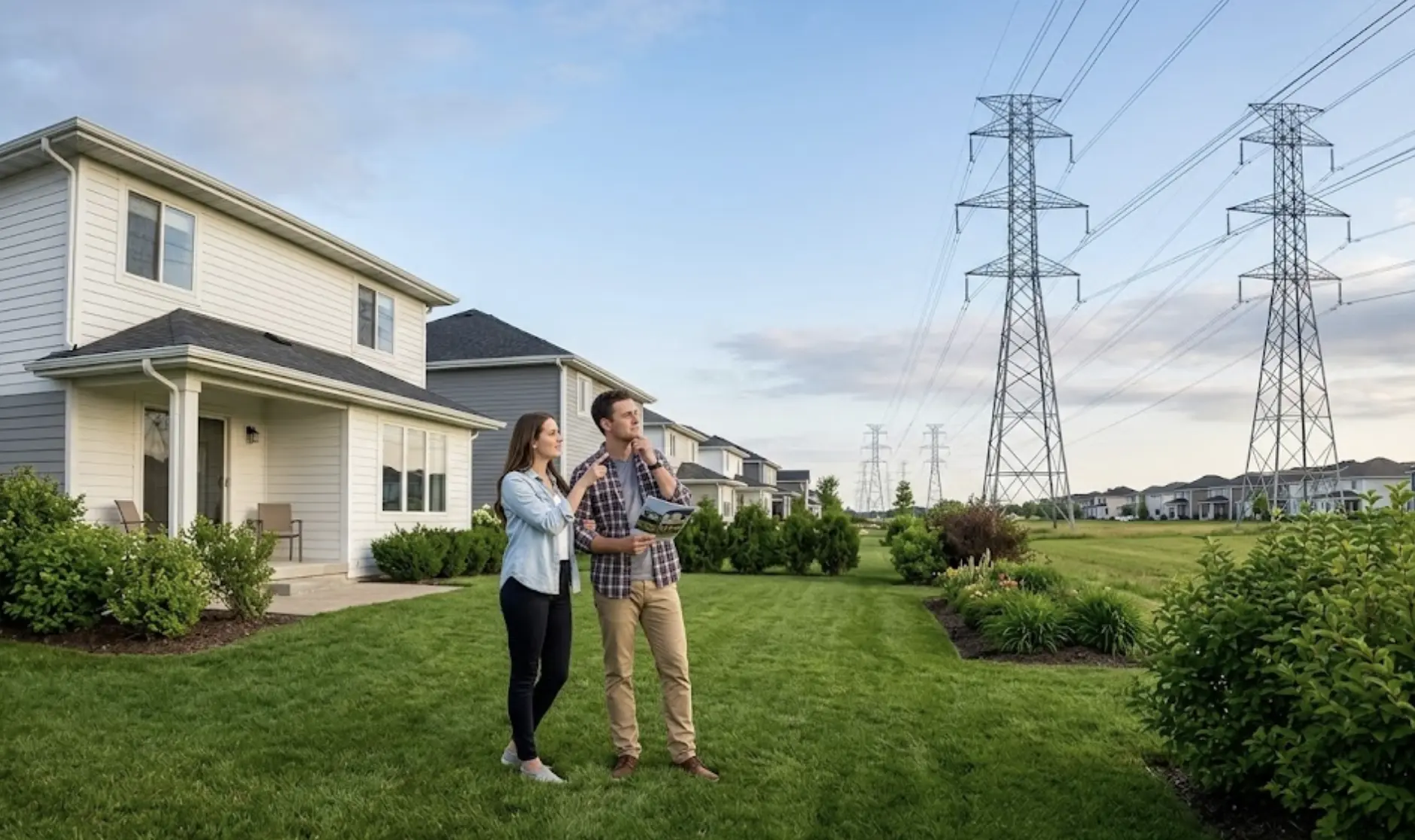
You have been searching for the house and you finally found one that meets almost all your needs: it is in a great neighborhood, the kitchen is updated, and the price is excellent. When you go into the backyard, you look up and see them. Big high-voltage transmission towers. Suddenly you are faced with a decision.
If you are wondering should I buy a house near power lines you are not alone. This is one of the common concerns for people buying houses in the United States. When people see power lines near a house they often worry about their health, safety and the value of the house.
Let’s look at the facts so you can make a decision about your next house purchase.
Is It Safe to Live Near Power Lines?
When people see power lines near a house their first question is usually about health. They are concerned about Electromagnetic Fields, which are areas of energy produced by electricity. These fields are emitted by everything from high-voltage lines to your microwave, Wi-Fi router and cell phone.
The truth about Electromagnetic Fields is that many studies have been done on their health effects. According to health organizations like the World Health Organization and the U.S. Environmental Protection Agency there is no clear proof that the low-level Electromagnetic Fields from power lines cause cancer or other health problems in adults or children.
The strength of a field decreases a lot as you move away from the source. In most cases by the time you get to the house the Electromagnetic Field levels from the power lines are similar to the levels found in any normal American house.
While science says it is safe, what people think is different. This affects the value of the house.
Pros and Cons of Living Near Power Lines
Every house purchase has bad points. Here are the pros and cons of living near power lines so you know what to expect.
The Good Things
- The house is cheaper: Houses near high-voltage lines are often priced lower than houses in the same neighborhood. If you cannot afford a house in an area, a house near power lines might be a good option.
- You do not have neighbors behind you: Utility companies need an area under the power lines where no permanent structures can be built. This means you will probably never have another house built behind yours giving you more space and privacy.
- You have land: Lots near power lines often feel bigger than they are giving you and your pets more space to enjoy.
The Bad Things
- The house is worth less: The biggest problem is that houses near high-voltage lines are worth less than houses further away. Even if you do not mind the power lines, future buyers might. Houses near power lines typically sell for 10% to 30% less than houses further away. When you want to sell, your house might take longer to sell.
- The noise: High-voltage lines often make a humming or crackling sound on humid or rainy days. This can be annoying when you are outside.
- The way it looks: Let’s face it, big steel towers are not pretty. They can ruin the view from your backyard.
- Restrictions on what you can build: Utility companies have the right to access the land under the power lines. They can come in to trim trees, clear brush, or service the towers at any time. You are also restricted on what you can build or plant in the area.
- Problems with financing: Some mortgage lenders have rules about houses near high-voltage towers.
The Ultimate Buyers Checklist
If you are seriously thinking about buying a house near power lines, do not sign anything until you have answers to these questions. You can ask your real estate agent, the title company and the local utility provider to protect your investment.
Questions for Your Real Estate Agent
- What do similar houses sell for?
Ask your agent to find houses in the same neighborhood with and without power lines. You need to know how much less the house is worth because of the power lines.
- How long has the house been on the market?
If it has been on the market for a long time you have more power to negotiate a lower price.
- Will my loan be approved?
If you are using a specific type of loan, confirm that the house meets the lender’s rules.
Questions for the Utility Company and Title Office
- What are the building restrictions?
Review the easement agreement to see what you can and cannot build.
- What are their access rights?
Can utility workers come into your backyard without notice?
- Are there any plans to add towers?
Ask the utility company if they plan to add towers or increase the voltage.
Things to Check Yourself
- Visit the house on a rainy or humid day to see if the humming noise is loud.
- Drive by the house at night to see if the towers have flashing lights that will shine into your windows.
- Buy a meter to check the Electromagnetic Field levels on the property.
Final Thoughts
Deciding whether to buy a house near power lines is a big decision. For some people the bad things about living near power lines like the noise and the way it looks are deal-breakers. For others, getting a lot and a cheaper house is a good deal.
If you are buying the house as a short-term investment it might be better to look elsewhere. If you plan to live in the house for a long time the initial discount might make it a good choice.
Always talk to a real estate agent who knows about houses near power lines. Let the facts, not your feelings guide your decision.
Frequently Asked Questions
Is it safe to live near power lines?
According to the World Health Organization and the U.S. Environmental Protection Agency there is no proof that living near power lines is bad for your health.
Do power lines affect the value of a house?
Yes houses near power lines are worth less than houses further away.
What are the good and bad things about living near power lines?
The good things include a lower price, more land and no neighbors behind you. The bad things include a lower resale value, noise and restrictions on what you can build.
Can I build a pool or a shed under power lines?
Usually no, because utility companies have rules about what you can build under their lines.